









We broadcast a recording of the interview with Milad Showkatbakhsh. The conversation took place in the frame of the course Emerging Fields in Architecture, TU Vienna (WS 2024/25)
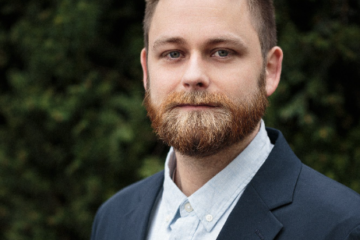
In this interview, Milad Showkatbakhsh — director of the EmTech program at the Architectural Association School of Architecture and co-founder of the evolutionary solver Wallacei — provides insights into optimization-based design processes.
We had the opportunity to take a closer look at how Wallacei and similar optimization tools operate within specific computational workflows. The discussion covers key concepts such as Pareto fronts, generations, and the logic behind evolutionary algorithms, explaining how these systems evaluate and evolve design solutions.
For this series, we asked: What are the main advantages of using sequential evolutionary simulations instead of one integrated model? When analysing results, which Wallacei analytics are most useful — parallel coordinates, scatter matrix, or K-means clustering? And how do designers decide which objectives are most relevant when working with evolutionary solvers?
We also discussed how such computational workflows can be integrated into real-life architectural projects. In this context, we asked how design decisions are made when moving from digital models to built reality, and how constraints such as structure, regulations, and practical rules influence the development of a project.
Additionally, Milad introduces selected research directions from the EmTech program, including work with biomaterials, generative AI, and emerging technologies. He reflects on how these approaches can be used to address contemporary architectural challenges and develop new design methodologies.
Hasibe Çepni Tiefenthaler and Stefan Münster conducted the interview and produced this broadcast as part of the course Mediated Architecture at TU Wien (2025W).
Further information about evolutionary solvers such as Wallacei, the work of Milad Showkatbakhsh, and selected research projects from the Architectural Association School of Architecture (EmTech program):
https://emtech.aaschool.ac.uk/
Academic Publications:
https://scholar.google.co.uk/citations?hl=en&user=E1zwLBAAAAAJ&view_op=list_works&sortby=pubdate
Radio Spaceuriosity at Radio Orange 94.0
Every 2nd TUE of the month
A broadcast by Sandra Häuplik-Meusburger and Verena Holzgethan
http://o94.at/radio/sendereihe/spaceuriosity/
Live Stream: http://o94.at/live/
cultural broadcasting archive: https://cba.fro.at/series/spaceuriosity
and on spotify