








For more than a decade, Viktor Orbán’s government steadily tightened its control over Hungary’s media landscape. Around 80 per cent of the country’s media outlets came under the influence of the ruling Fidesz party, while public service broadcasting increasingly served as a propaganda tool.
Despite growing political and economic pressure, some independent media organisations managed to survive and to report critically. How did they do it? And now that Orbán is no longer in office, what are the prospects for restoring media freedom in Hungary?
For COMMITEd, Laurence Monnot spoke with media law expert Bea Bodrogi and journalist Daniel Kemény in Budapest.
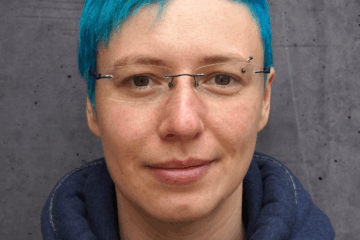
Bea Bodrogi is a lawyer specialising in Hungarian media law. She advises independent media organisations and has worked as a researcher for the New York Rule of Law Lab. She is also co-author of a report by the Mertek Media Monitor documenting government pressure on independent media.
Daniel Kemény is a reporter for RTL Hungary, one of the few major broadcasters that maintained its editorial independence during the Orbán era. He is also the founder of the community radio station Radio X.
Photo Bea Bodrogi ©NYU Rule of Law Lab
Interviews und Sendungsgestaltung: Laurence Monnot
Weiterführende Links:
The Repression of Independent Media in Hungary, 2010–2025. Mertek Media Monitor & Rule of Law Lab. https://mertek.eu/wp-content/uploads/2026/02/The_Repression_of_Independent_Media_in_Hungary.pdf