







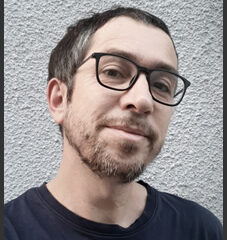

Romina Achatz is in conversation with theater artist and director Mbene Mwambene. He grew up in Zambia and Malawi and lives in Bern, Switzerland. Since he is very young he directs political theater-plays. Mbene worked as journalist and after touring with a piece for more than 6 years, he did a Master in “Expanded Theatre” at the “Berner Hochschule der Künste”. In 2018 he directed at the Kleckstheater in Hannover a piece called Tavuka, casting solely female actresses. It is an adaption of The Island and Waiting for Godot. Mwambene’s performances reflect his personal encounters with xenophobia, stereotyping and racism in Switzerland and Europe. “In Malawi racism wasn’t an issue for me, but here in Switzerland I am constantly confronted with the image people have of ‘the black man’,” he says. Theatre and poetry provides for him a safe space that allows to tell his own stories. Mbene’s work confronts audiences with the realities of his daily life in Europe.
This episode of FEM*POEM starts with a poem which is an extract of the solo piece called “The Whispers”. They talk about his solo performance “The Story of the Tiger”, a political piece adapted from the work of Italian playwright Dario Fo; about growing up in Malawi, about structural and systemic violence, colonialism, racial profiling and his upcoming work.



comment dit-on?:
“au point” justement…
(nous y avons parlé aujourd’hui…)
merveilleux!